How is AI affecting your work?
Whether it’s helping, harming or changing the way you work, we want to hear about it.
Share your experience and we’ll send you a free pack of our AI workplace stickers.
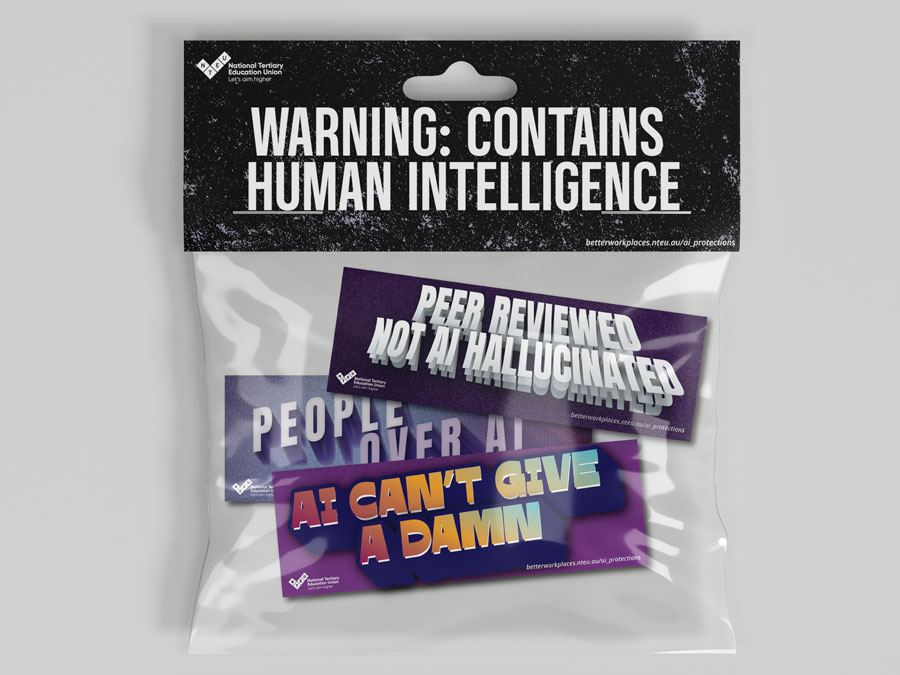
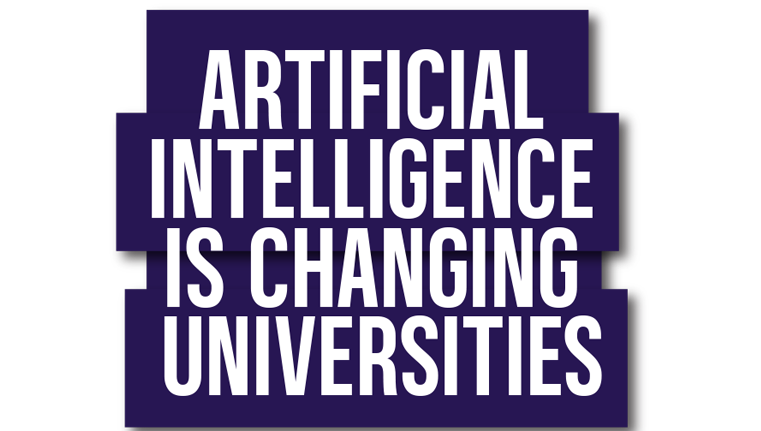
Universities are rapidly introducing AI into teaching, research, administration and decision-making. These technologies have the potential to enhance our work, but their introduction must be ethical and informed by the people who use them.
AI should support education, research and the people who make universities function, not intensify workloads, expand surveillance, undermine professional expertise or make unsafe decisions affecting staff and students.
That’s why university workers are campaigning for stronger AI protections, including meaningful consultation, transparency, human oversight and enforceable safeguards.
Tell us what’s happening in your workplace.
What does it mean?
key fact
AI should support you, not replace you
key fact
You should have a say in how AI is introduced and used in your workplace ensuring it protects jobs, academic integrity, and student outcomes.
key fact
AI must be addressed in your workplace agreement, with staff voice at the centre of the conversation.
AI is here to stay, but without safeguards and worker governance, it can be used to cut jobs, intensify workloads, and compromise academic standards. AI needs to be implemented ethically, transparently, and with staff protections built in.

NTEU recognises the potential of AI to enhance and enrich work and outcomes in our sector, provided that it is developed and implemented in an ethical manner that does not represent a high risk to the sector, our members or the national interest in maintaining a trusted high-Quality higher education system.
With members working in an industry whose function is the generation and transmission of knowledge and where citation is, not only the currency of an academic career, it is how works are authenticated and evaluated. Current mining of materials by Large Language Models can rapidly undermine the nature of academic work, and is already having impacts on members through misappropriation of intellectual property as well as denial of the moral rights of authors. At the same time it has enormous potential when used ethically and transparently.
AI also poses many challenges that are not readily regulated within our industrial relations systems as they are currently configured. For example the model consultation term in the Fair Work Act requires an employer to consult with employees after a decision has made, whereas experience to date indicates that the use of AI is best when it is via a collaborative process for design, and cooperative trials are run to determine its suitability in the workplace. Similarly the industrial relations framework does not readily deal with issues of ownership and privacy of employee personal data.
For this reason we believe there need to be strong guardrails in addition to the rights and protections in the Fair Work Act.